Key takeaways
- Your lungs naturally age over time and can become less flexible, making breathing more difficult, but adopting healthy habits can help maintain lung function even into your senior years.
- Quitting smoking is one of the most important steps for lung health; smoking is linked to chronic obstructive pulmonary disease (COPD), lung cancer, and other respiratory diseases.
- Regular aerobic exercise, avoiding pollutants, preventing infections through handwashing and vaccinations, and practicing deep breathing exercises can all help keep your lungs strong.
Most people want to get healthier. Rarely, though, do they think about protecting and maintaining the health of their lungs.
It’s time to change that. According to the
In total, excluding lung cancer, these conditions caused 145,643 deaths in 2023. Lung cancer, meanwhile, causes
The truth is that your lungs, like your heart, joints, and other body parts, age with time. They can become less flexible and lose their strength, which can make it more difficult to breathe.
But by adopting certain healthy habits, you can better maintain the health of your lungs and keep them working optimally even into your senior years.
You probably already know that smoking increases your risk of lung cancer. But that’s not the only disease it can cause.
Smoking is linked to most lung diseases, including COPD, idiopathic pulmonary fibrosis, and asthma. It also makes those diseases more severe. For example, smoking accounts for as many as
In addition, cigarette smoking or secondhand exposure to smoke causes nearly
It’s also worth noting that e-cigarettes and vaping products are not a safe alternative. Research shows they can cause lung damage and expose users to harmful chemicals.
How does smoking damage the lungs?
Every time you smoke a cigarette, you inhale thousands of chemicals into your lungs, including nicotine, carbon monoxide, and tar. These toxins damage your lungs by increasing mucus, making it more difficult for them to clean themselves, and irritating and inflaming tissues. Gradually, your airways narrow, making it more difficult to breathe.
Smoking also causes the lungs to age more rapidly. Eventually, the chemicals can change lung cells from benign to cancerous.
What are the benefits of quitting smoking?
Quitting can help regardless of your age or how long you’ve been smoking. The American Lung Association (ALA) states that within 12 hours of quitting, the carbon monoxide level in your blood drops to typical levels.
Within a few months, your lung function begins to improve. Within a year, your risk of coronary heart disease is half that of a smoker. And it only gets better the longer you stay smoke-free.
Quitting usually takes several attempts. It’s not easy, but it’s worth it. According to a report by the United States Preventive Services Task Force, combining counseling and medication may be the best way to succeed.
Besides avoiding cigarettes, getting regular exercise is probably the most important thing you can do for the health of your lungs. Just as exercise keeps your body in shape, it keeps your lungs in shape, too.
When you exercise, your heart beats faster, and your lungs work harder. Your body needs more oxygen to fuel your muscles. Your lungs step up their activity to deliver that oxygen while expelling additional carbon dioxide.
According to a 2016 article, during exercise, your breathing increases from about
This type of exercise provides the best workout for your lungs. The muscles between your ribs expand and contract, and the air sacs inside your lungs work quickly to exchange oxygen for carbon dioxide. The more you exercise, the more efficient your lungs become.
Creating strong, healthy lungs through exercise helps you to better resist aging and disease. Even if you do develop lung disease down the road, exercise helps to slow the progression and keeps you active longer.
Exposure to pollutants in the air can damage your lungs and accelerate aging. When they’re young and strong, your lungs can easily resist these toxins. As you age, though, they lose some of that resistance and become more vulnerable to infections and disease.
Give your lungs a break. Reduce your exposure as much as you can by:
- avoiding secondhand smoke, and trying not to go outside during peak air pollution times
- avoiding exercise near heavy traffic, as you can inhale the exhaust
- minimize exposure to airborne pollutants at work, such as in construction, mining, and waste management, by taking all possible safety precautions
The U.S. Consumer Product Safety Commission reports that indoor pollution is typically worse than outdoor. That, plus the fact that many spend most of their time indoors these days, increases exposure to indoor pollutants.
Here are some tips for decreasing indoor pollutants:
- Make your home a smoke-free zone.
- Dust the furniture and vacuum it at least once a week.
- Open a window frequently to increase indoor air ventilation.
- Avoid synthetic air fresheners and candles that can expose you to additional chemicals like formaldehyde and benzene. Instead, use an aromatherapy diffuser and essential oils to scent the air.
- Keep your home as clean as you can. Mold, dust, and pet dander can all irritate your lungs.
- Use natural cleaning products when possible, and open a window when using products that create fumes.
- Make sure you have adequate fans, exhaust hoods, and other ventilation methods throughout your home.
Infections can be particularly dangerous for your lungs, especially as you age. Those with lung diseases like COPD are particularly at risk for infection, also known as pneumonia. Even healthy seniors can easily develop pneumonia if they’re not careful.
The best way to avoid lung infections is to keep your hands clean. Wash regularly with warm water and soap, and avoid touching your face as much as possible.
Drink plenty of water and eat lots of fruits and vegetables, as they contain nutrients that help boost your immune system.
Stay up-to-date with your vaccinations. Get a flu shot each year, and if you’re 50 or older, get a pneumonia vaccination as well. In addition, stay up-to-date with required booster shots for COVID-19.
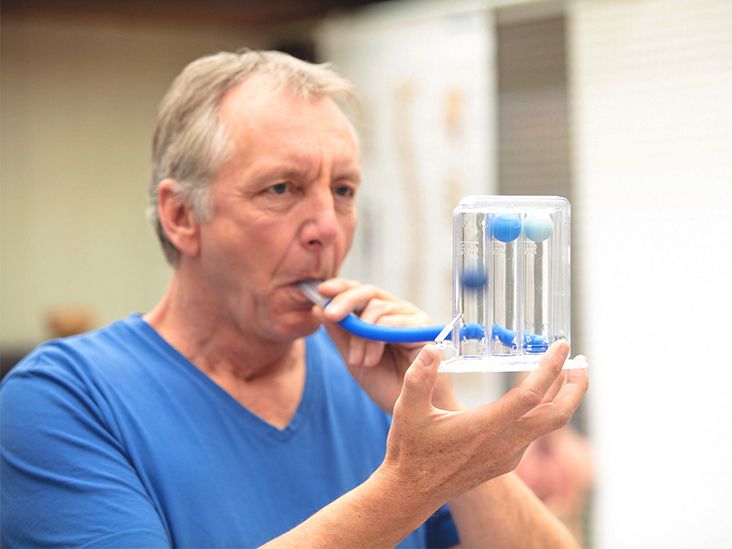
If you’re like many people, you take shallow breaths from your chest area using only a small portion of your lungs. Deep breathing helps clear the lungs and creates a full oxygen exchange. According to the ALA, breathing exercises can make your lungs more efficient.
To try it yourself, sit somewhere quiet and slowly breathe through your nose alone. Then, breathe out at least twice as long through your mouth. It may help to count your breaths. For example, as you inhale, count 1-2-3-4. Then, as you exhale, count 1-2-3-4-5-6-7-8.
Shallow breaths come from the chest, and deeper breaths from the belly where your diaphragm sits. Be aware of your belly rising and falling as you practice. Doing these exercises makes you feel less stressed and more relaxed.
Try to incorporate these five habits into each day: Stop smoking, exercise regularly, reduce exposure to pollutants, avoid infections, and breathe deeply. By focusing a little of your energy on these tasks, you can help keep your lungs working optimally for life.