
Most melanomas are brown and black, but they can also be pink, tan, or white. They can develop anywhere on the body, but are more likely to appear on the chest and back in men and on the legs in women. The neck and face are other common sites.
Melanoma is one of the least common forms of skin cancer, but it’s also the deadliest type because of its potential to spread to other parts of the body.
In 2022, an estimated 99,780 people will be diagnosed with melanoma, and more than 7,600 people are expected to die from it. Rates of melanoma are on the rise.
Find out what melanoma looks like and when to see a doctor.
Melanoma is a type of cancer. It may also be called malignant melanoma or cutaneous melanoma.
Most melanomas are brown and black, but they can also be pink, tan, or even white.
There are four main types of melanoma, and each may present differently based on many factors, including skin tone. Many melanomas are flat or barely raised. They may have a variation of colors with irregular borders.
The thickness of the melanoma is known as the
Melanomas can develop anywhere on the skin, but they are
Most moles will never cause any problems, but someone who has many moles is
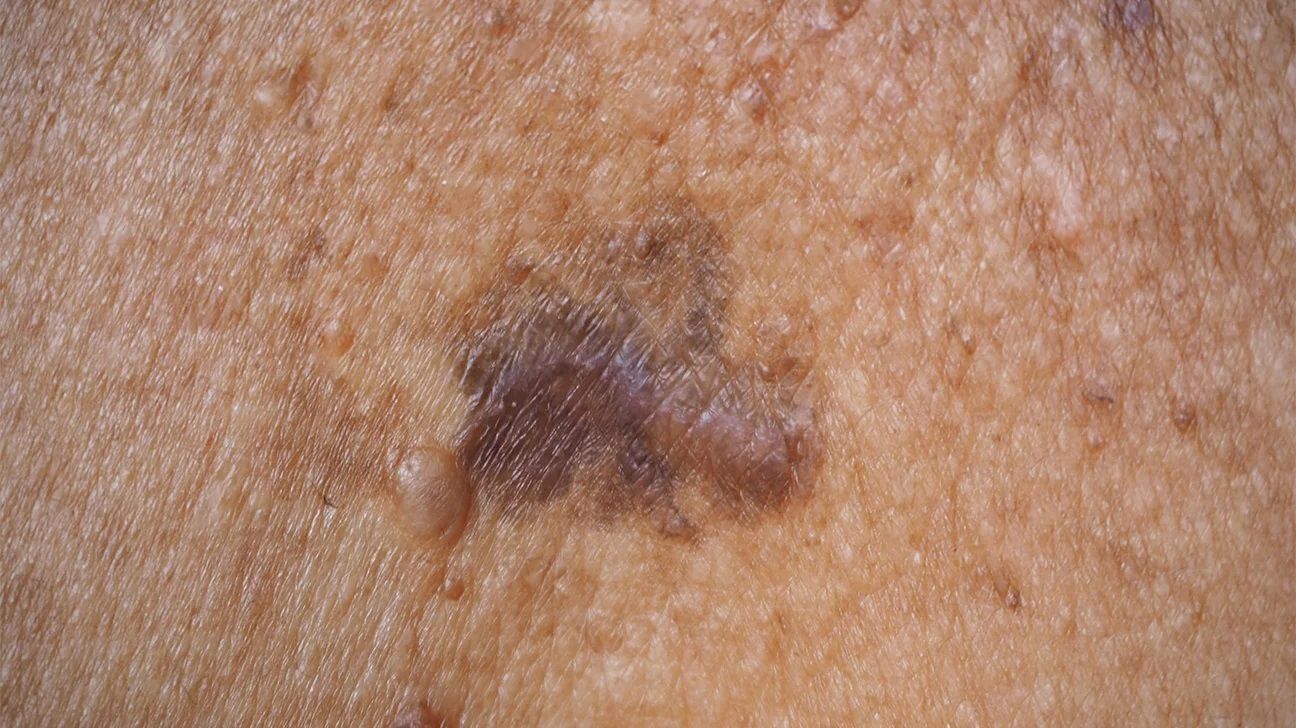
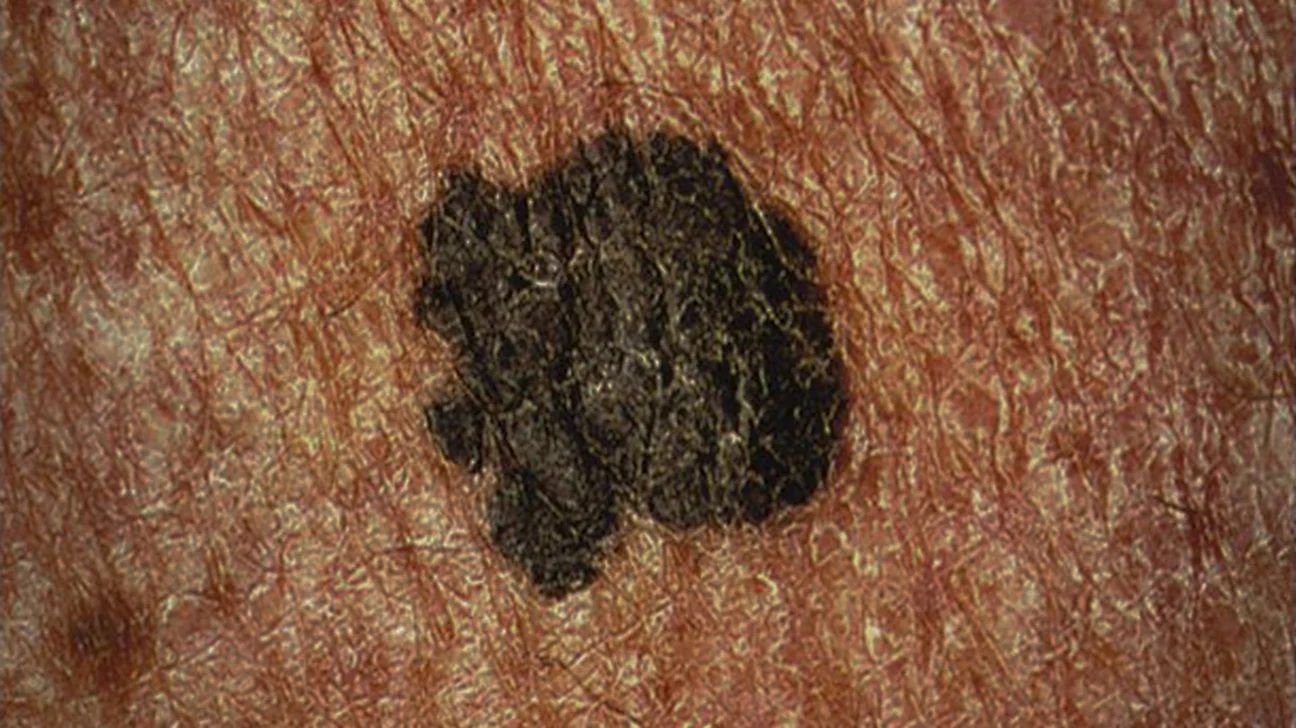
Superficial spreading melanoma
Superficial spreading melanoma is a type of skin cancer that grows horizontally in upper layers of the skin and eventually into deeper layers of the skin.
It’s the most common type of melanoma, accounting for 70 percent of all diagnosed melanomas. Symptoms and traits to look out for include:
- raised or flat shape, often with irregular shape and borders, sometimes on an existing or new mole
- brown, black, tan, red, blue, and even white, often a darker shade of a person’s normal skin tone
- slow changes, often over the course of months or years
jaojormami/Adobe Stock
CDC/ Carl Washington, M.D., Emory Univ. School of Medicine; Mona Saraiya, MD, MPH
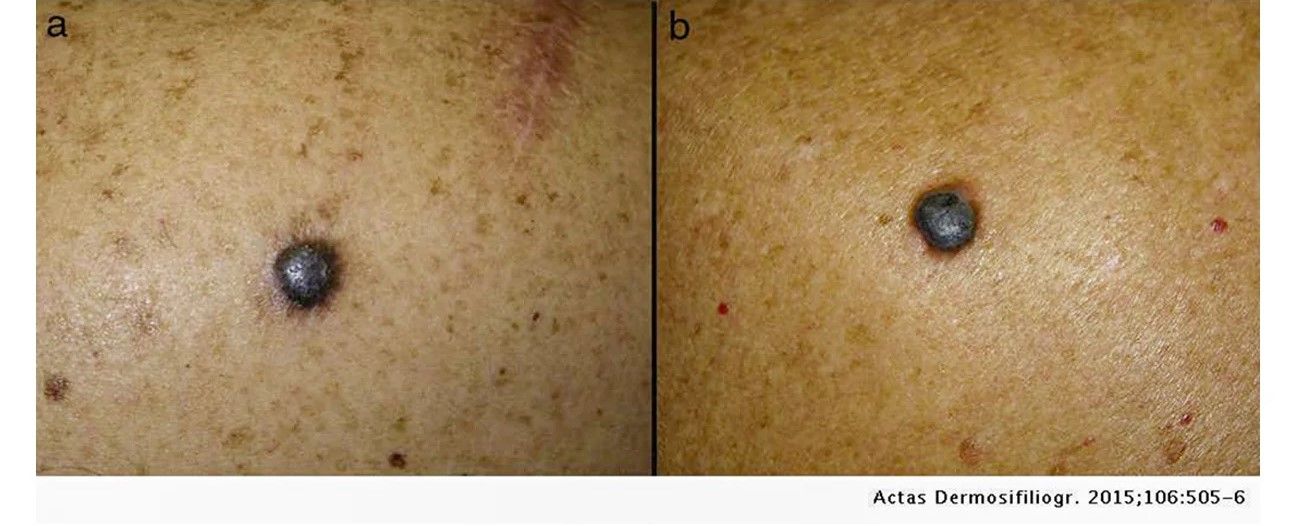
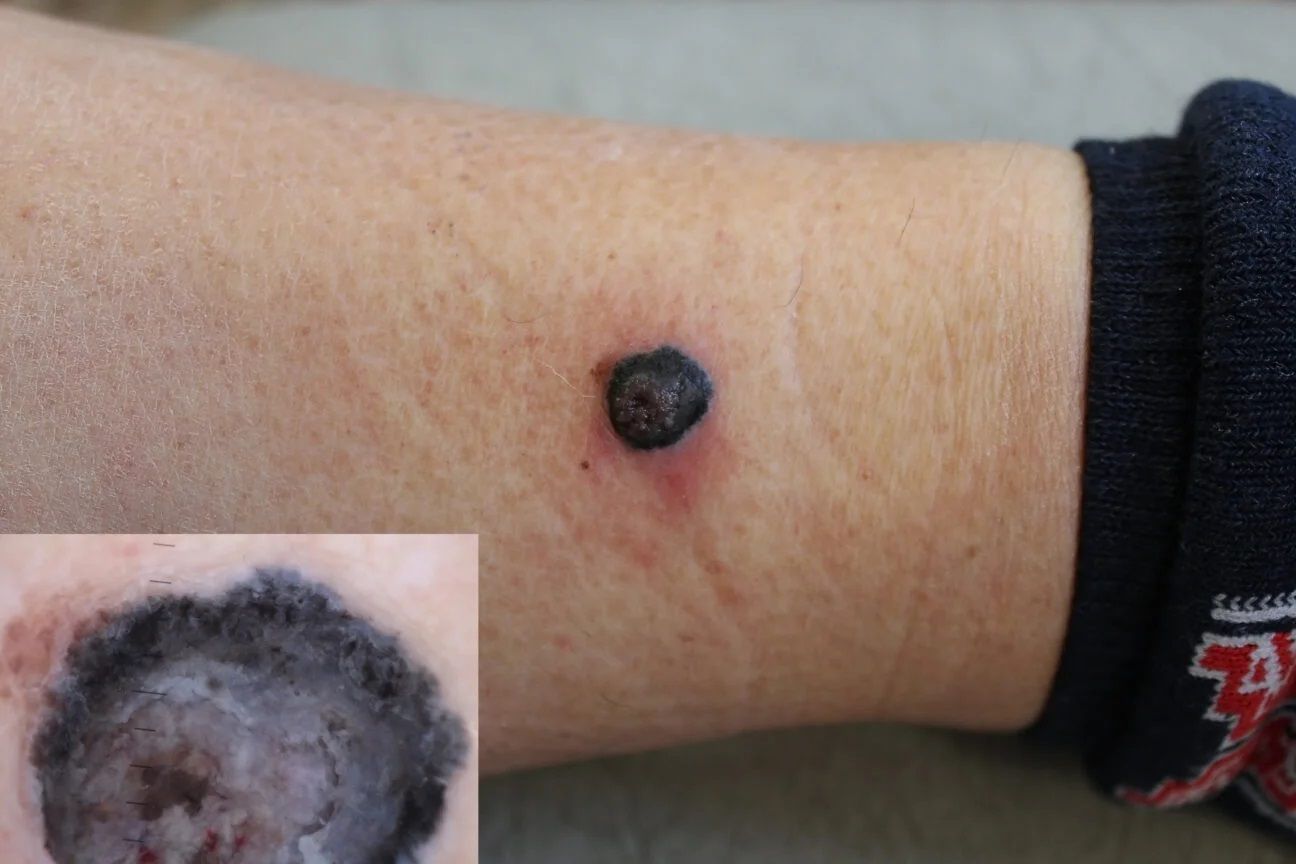
Nodular melanoma
Nodular melanoma is one of the most aggressive forms of skin cancer. Symptoms and traits to look out for include:
- a hard, raised bump
- blackish-blue, dark brown, or reddish-blue in color (sometimes the same tone as the skin)
- continuously growing in size and shape, especially after 2 to 3 weeks
Hutchinson’s melanotic freckle (aka lentigo maligna melanoma)
Hutchinson’s melanotic freckle is an invasive skin cancer that develops out of lentigo maligna, a type of melanoma in situ. This means that it’s not cancerous and isolated just to the upper layers of the skin. This type of melanoma
- a large flat or slightly raised brown or black patch, similar to an age spot or freckle
- having a smooth surface and irregular shape
- having a brown hue, though it can also be red, pink, or white on occasion, depending on skin tone
- a larger patch, usually at least 6 millimeters
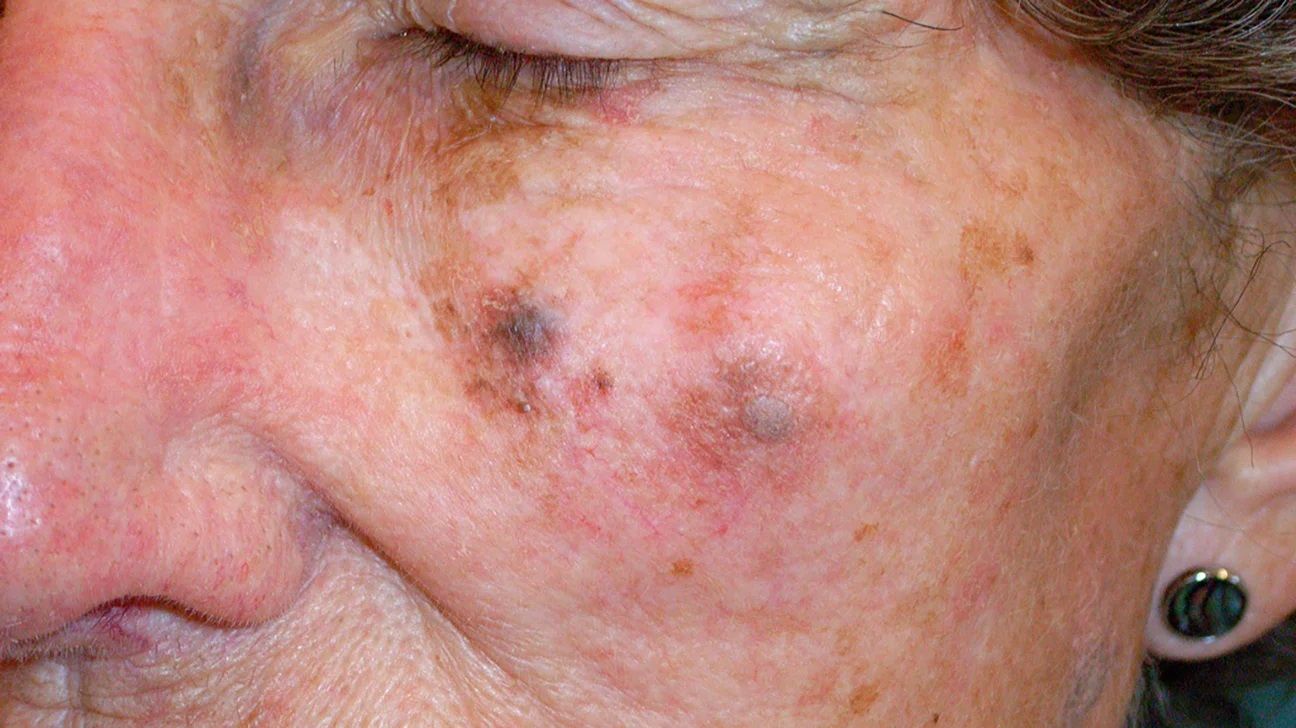
Photo: DermNet New Zealand
Acral lentiginous melanoma
Acral lentiginous melanoma is the most common form of malignant melanoma in people with darker skin tones. Symptoms and traits to look out for include:
- a discolored spot, often occurring on the palm, soles of the feet, fingers, toes, or nails, starting as an enlarging patch of discolored skin
- similar in appearance to a stain or bruise
- placement on a person’s hands and soles, and even occasionally in nail beds
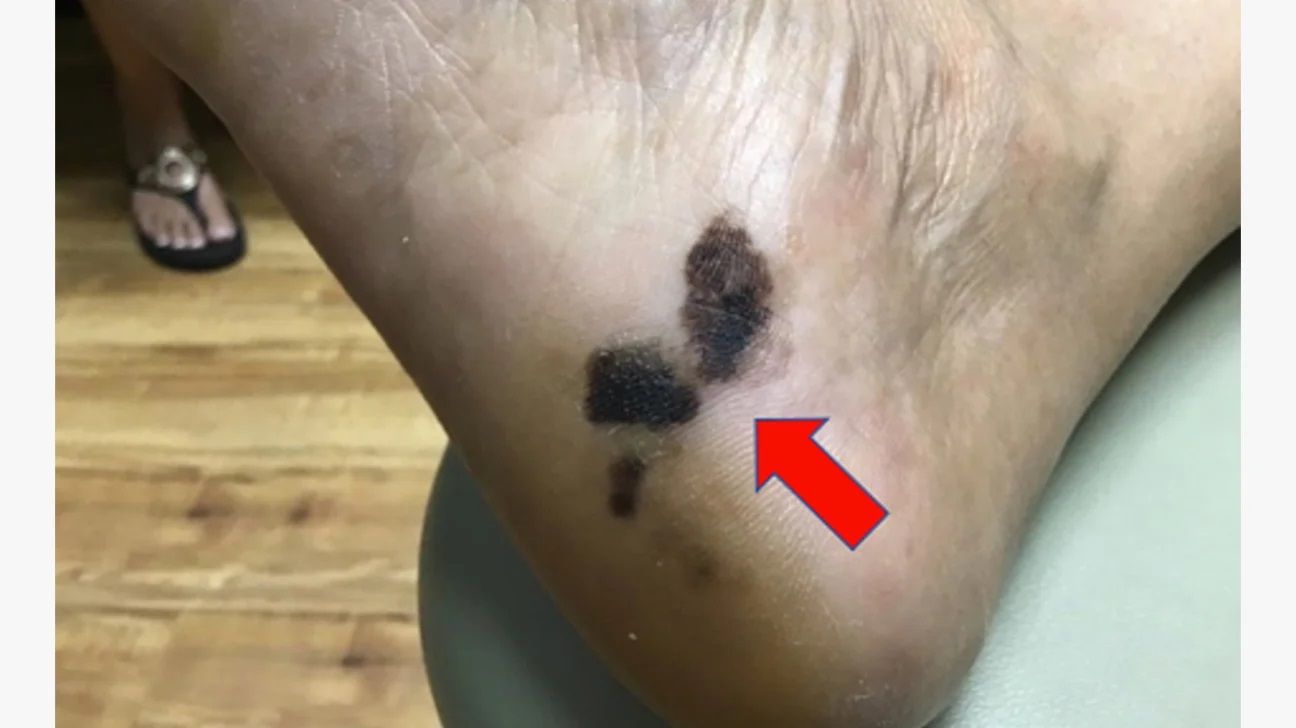
Brazen B C, Gray T, Farsi M, et al. (June 03, 2020) Acral Lentiginous Melanoma: A Rare Variant With Unique Diagnostic Challenges. Cureus 12(6): e8424. doi:10.7759/cureus.8424
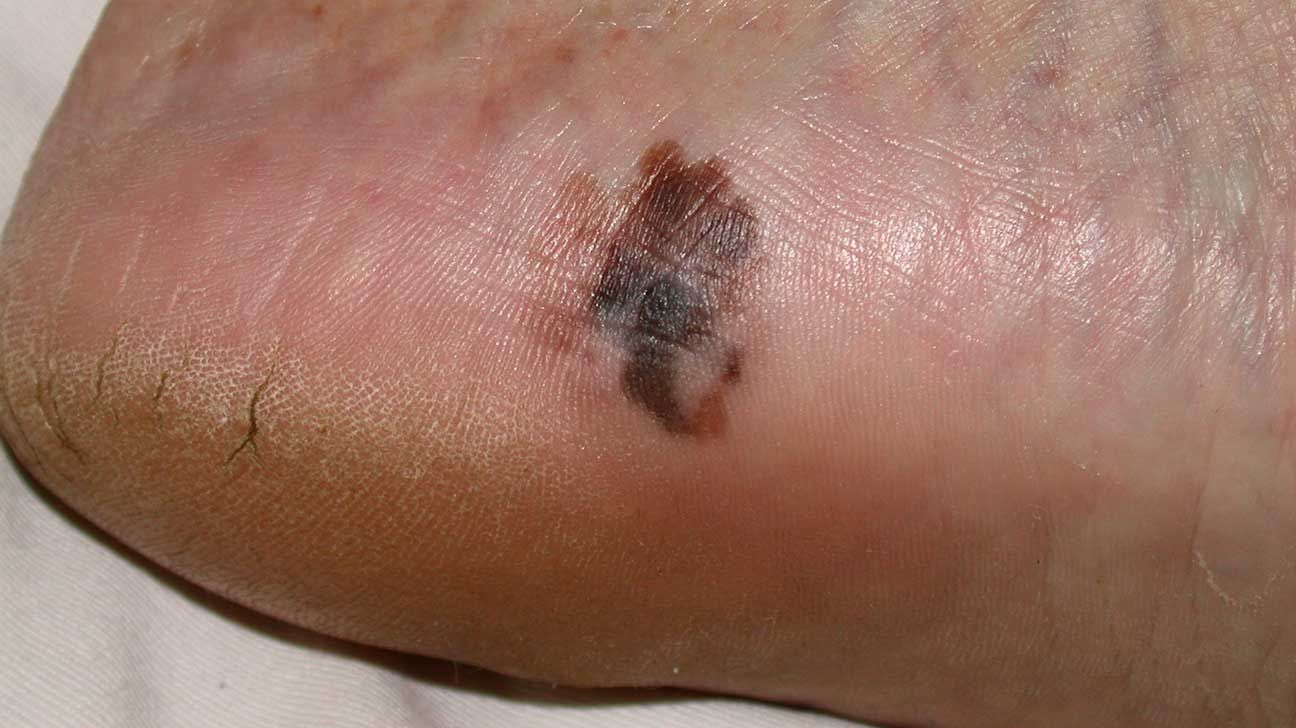
Photo: DermNet New Zealand
Rare types of melanoma
- Mucosal melanoma. A form of melanoma that is found in moist areas of the body, such as the eyes, mouth, vagina, and vulva, among others.
- Desmoplastic melanoma. A form of melanoma that is usually found on skin that contains high amounts of cumulative skin damage on the head and neck. It accounts for approximately 1 percent of all melanomas in the United States.
- Uveal melanoma. A form of melanoma found in the eyes that may cause vision impairment and loss, among other issues. Early symptoms of uveal melanoma are rare and often discovered during routine eye exams. Later symptoms can include dark spots in the eyes, blurred vision, floaters, and changes to the eye shape and position.
There are
- getting sunburned frequently, especially if the sunburn was severe enough to cause your skin to blister
- living in locations with more sunlight
- using tanning beds
- having fairer or more freckled skin
- having a personal or family history of melanoma
- having a large amount of moles on your body
- having had skin cancer previously
- having a weakened immune system
Just about everyone has at least one mole — a flat or raised spot on the skin that may be colored or the same tone as the skin. These spots are caused when skin pigment cells called melanocytes assemble into clusters.
Moles often develop in childhood. By the time you reach adulthood, you may have 10 or more of them on your body.
Most moles are harmless and don’t change, but others can grow, change shape, or change color. A few can turn cancerous.
The biggest clue that a spot on the skin might be melanoma is if it’s changing. A cancerous mole typically changes in size, shape, or color over time.
Dermatologists use the ABCDE rule to help people spot the signs of melanoma on their skin:
- Asymmetry
- Border
- Color
- Diameter
- Evolving
Asymmetry
A mole that’s symmetrical will look very similar on both sides. If you draw a line through the middle of the mole (from any direction), the edges of both sides will match each other very closely.
In an asymmetrical mole, the two sides won’t match in size or shape. Cancer cells tend to grow more quickly and more irregularly than noncancerous cells.
Border
The edges of a normal mole will have a clear, well-defined shape. The mole is set apart from the skin around it.
If the border seems fuzzy — like someone has colored outside of the lines — it could be a sign that the mole is cancerous.
Color
Moles can come in many different colors, including brown, black, or tan. If you’re seeing a variety of colors in the same mole, it could be cancerous.
A melanoma mole will often have different shades of the same color, such as brown or black, or splotches of different colors (e.g., white, red, gray, black, or blue). This can vary on different skin tones.
Diameter
Moles usually stay within certain size limits. Most normal moles measure about
Bigger moles can indicate signs of trouble. Moles should also remain consistent in size. If you notice that one of your moles is growing over time, consider having it examined.
Evolving
A changing mole can signal trouble. That’s why it’s important to do regular skin checks and keep an eye on any spots that are growing or changing shape or color.
Beyond the ABCDE signs, look out for any other differences in the mole, such as:
- redness
- scaling
- bleeding
- oozing
Although rare, melanoma can also develop under the nails. This is called subungual melanoma. When this happens, it will often appear as a band of pigment across the nail, and may also:
- cause thinning or cracking of the nail
- develop nodules and bleeding
- become wider by the cuticle
Melanoma doesn’t always cause pain when it’s under the nails. Talk with a doctor if you notice any changes in your nails.
Dermatology11/Shutterstock
By doing regular skin checks, you can spot possible skin cancer early enough for it to be treated.
If you do find anything new or unusual on your skin, see a dermatologist for a more thorough skin check.
People who have a lot of moles and a family history of skin cancer should try to see a dermatologist regularly. A dermatologist can map your moles and keep track of any changes.
They might take a sample of the mole, called a biopsy, to check for cancer. If the mole is cancerous, the goal will be to remove it before it has a chance to spread.
What does a melanoma look like when it first appears?
Melanoma may begin with visible changes in an existing mole. This can involve its shape, color, size, or texture. It may also show up as a new mole.
Is melanoma raised or flat?
There are four main types of melanoma, and they can all look different. It
How can you tell if a spot is melanoma?
Any change to an existing mole, or the appearance of a new mole, warrants being examined by a doctor. Only a medical professional can determine if this change is melanoma.
What are the three signs and symptoms of melanoma?
There are
- uneven shape
- irregular edges
- variance in color or discoloration
- larger than the size of a pencil erases
- change in size, contour, or coloration
- itching or seeping
- a sore that doesn’t heal
- coloring that spreads from the spot to the surrounding skin
- redness of swelling that spreads to the surrounding skin
- pain, tenderness, or itchiness
- texture change in the mole such as scaliness, oozing, bleeding, or the appearance of a lump.
Learn more about melanoma.